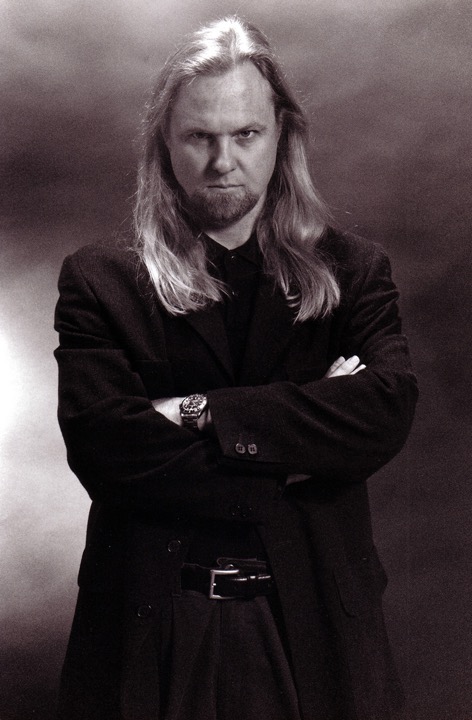
Scott Shaw: How Not to Make it in Hollywood
This interview originally appeared in B-Movies Magazine, U.K. September 2006
By Jay MacIntyre
Hollywood based filmmaker Scott Shaw has had a truly unique career as a filmmaker. Whereas most young filmmakers set about going through film school and then working their way up through the Hollywood ranks, Shaw burst onto the indie scene presenting the world with a new style of filmmaking he titled Zen Filmmaking. With this format as his guide he provide the film going audience with a handful of colorfully titled films such as Samurai Vampire Bikers from Hell, Guns of El Chupacabra, Max Hell Frog Warrior, Vampire Blvd. and Killer: Dead or Alive. In this article we look into the mind of the man who has become one of the most unique voices in the independent film community.
How did you get involved in filmmaking?
Well, as I always like to say, I was a reluctant participant. I grew up in Hollywood and by the time I was in high school I knew a lot of people who were already has-been actors praying for the next big-break that never came. Others were the children of famous actors or filmmakers and they lived in this world of make-believe, dreaming that Hollywood would come knocking on their door some day. But, mostly all I saw was a lot of kids who lived in these palatial mansion and every time I went over to their houses their parents were either wasted and passed out on the floor or they were screaming about how they had no money and they were being evicted. So, it made me see the down side of the whole film game really early on in my life and I told myself I would never become a part of it.
What high school did you go to?
Hollywood High School.
During that period did you get to visit any of the sets of films or T.V.?
Yeah, my friendships did get me onto the sets of a few films. One of my friend’s fathers was an Assistant Director. So, I got to see them making films like Carrie and Airport.
Did you get to meet any of the actors in those films?
Sure, but you have to understand, I grew up in Hollywood, I saw actors and actresses all the time; they never really impressed me. But, one meeting I remember was with Ray Milland. He had a pretty big career back in the day. He was a very personable guy and I got talking to him one day on a set. I asked him about his career and he looked at me and told me, “It’s all bullshit. It’s just a job like any other. The only problem with this job is that you get no privacy.” Those comments have always stuck in my mind.
What finally lured you into the world of filmmaking?
I guess it was a natural progression. I had always been a photographer and for years I had been spending a lot of time in Asia. One thing led to another and I began to make documentaries.
You had a friendship with the creator of Hell Comes to Frogtown, Donald G. Jackson. Tell us about that?
Don and I met when I was first getting into the filmmaking game. To this day I don’t know if it was a blessing or a cruse. But, we did end up making quite a few films together.
A blessing or a cure; what do you mean?
Well, Don was a complicated guy. I think he had some undiagnosed manic condition. One minute he would be fine and the next he would be completely freaking out. Though he always treaded me with the utmost respected, or we would not have been friend, he did fly off the handle and infuriate a lot of people. He made a lot of enemies in the industry. And, because I was his friend, many people assumed I should be blamed for his actions. But, I am very different kind of person then he was.
With Jackson, you created a new style of filmmaking that you titled Zen Filmmaking. Tell us about that.
Basically, Zen Filmmaking is based on the premise that we would just let the moment guide us in the creation of a film.
What does that mean?
That we refused to have any preconceived notions about how a film or even a scene would turn out.
You used no scripts, is that correct?
That’s correct.
Then how did you get the story told?
That’s the whole beauty of Zen Filmmaking. The story doesn’t matter. It’s all about the moving images taking shape and creating a visual form of art.
That’s pretty artsy.
Yes, it is.
You made a number of films without Donald G. Jackson. How are the films you made by yourself different from the ones you made with Jackson?
Well, the films I made with Don were chaos. Mine are organized chaos.
What do you mean?
Don was a very random guy. He or I would come up with an idea for a film. He would get all excited about it. We would cast it, go out and film for a day or two and then, many times, he would lose interest, so the film would just fall away. Me, on the other hand, what I start, I finish.
How do you feel about actors and actresses?
That’s what makes a movie a movie. So, unless you want to use sockpuppets, you’ve got to have ‘em.
How do you direct your actor?
I don’t, really. I simple cast people I know can be believable in the roles they are playing. Then I set up a scene, tell them the basic premise about what to talk about, or what to do, and let them do what they do.
How do you feel about your crew?
The crew is a little bit different story. You know, I am always happy to help people learn about the industry, but you have to understand, there are a lot of vampires out here in Hollywood; a lot of people who simply come onboard a production and just want to suck your energy. They either want to get paid way more than they are worth or they want to learn how to do what I do, so they can go out and do it themselves. The problem is, none of them ever do. The biggest problem I find is that a lot of crew people just don’t care about the finished product, so they provide you with inferior quality work.
Have you had problems with specific crewmembers?
Sure. The people who really tick me off are the bad cameramen. I mean the visual image is the essence of a film. But, most of the so-called D.P.s come onboard full of promises and then they film the movie like shit. The image is out of focus or poorly shot. Then it is me who has to go and either reshoot the scene or try to make it work in editing. Filmmaking is not cheap and these are the people that really screw up the process.
Where do you get financing for your films?
It all comes out of my own pocket. I never take money from anybody. One of the main things I inadvertently learned from Don was what not to do in the film industry. And, taking money from someone makes everything a big mess. So, I never take money to make my films. I pay for them all myself.
Where do you see your filmmaking career going next?
I’m just going to keep doing what I’m doing. What I’ve found is that people are starting to understand what I’ve been doing for almost two decades now. I mean there have always been those who understood, but now those numbers seem to be growing. Some people just seem to understand filmmaking as an art. In fact, a film Don and I created, Guns of El Chupacabra, won a few awards at a film festival this year. And, it is up for the ‘all time worst film ever,’ or something like that at next year’s festival.
Worst film?
Yeah. Good or bad, whatever you call it, that is all right with me. As long as people are watching and getting some entertainment out of it. I mean, that’s what filmmaking is all about.
How do you feel when people express harsh words about your films?
I have a very simple philosophy in life, if you have done something bigger than me or better than me, than I will listen to you. If not, don’t waste my time. You know, there are a lot of people out there who want to express their opinions about movies and the people who make them. These are generally people who have never made a film, don’t understanding anything about the filmmaking process, and probably never will. Yet, they want to critique the films that other people have made and claim that they could make a better movie if they wanted to. What I say is, ‘What gives them the right?’ As far as I’m concerned, they haven’t earned the right to criticize anything.
Do you ever see yourself directing a big budget film and really making it in Hollywood?
That question is based upon the contention that I want to make it in Hollywood. I don’t. There are all these people out there who want to be stars. They go though all kinds of hell, only to be disappointed. My belief is why would I want to allow anyone to have control over my destiny. You know, I have known so many actors and filmmaker who at one point in their careers were super famous, then they ended up broke and either going from couch to couch or living back at home with their parents. So me, I just do what I do. It is all about the art. I do it because I love it. If the studios came knocking, I probably wouldn’t answer the door.
Copyright © 2006 — All Rights Reserved.